
DNAEksperECU software analysis and inspection
Has the ECU software been tampered with? Upload the file and get a structured inspection report.
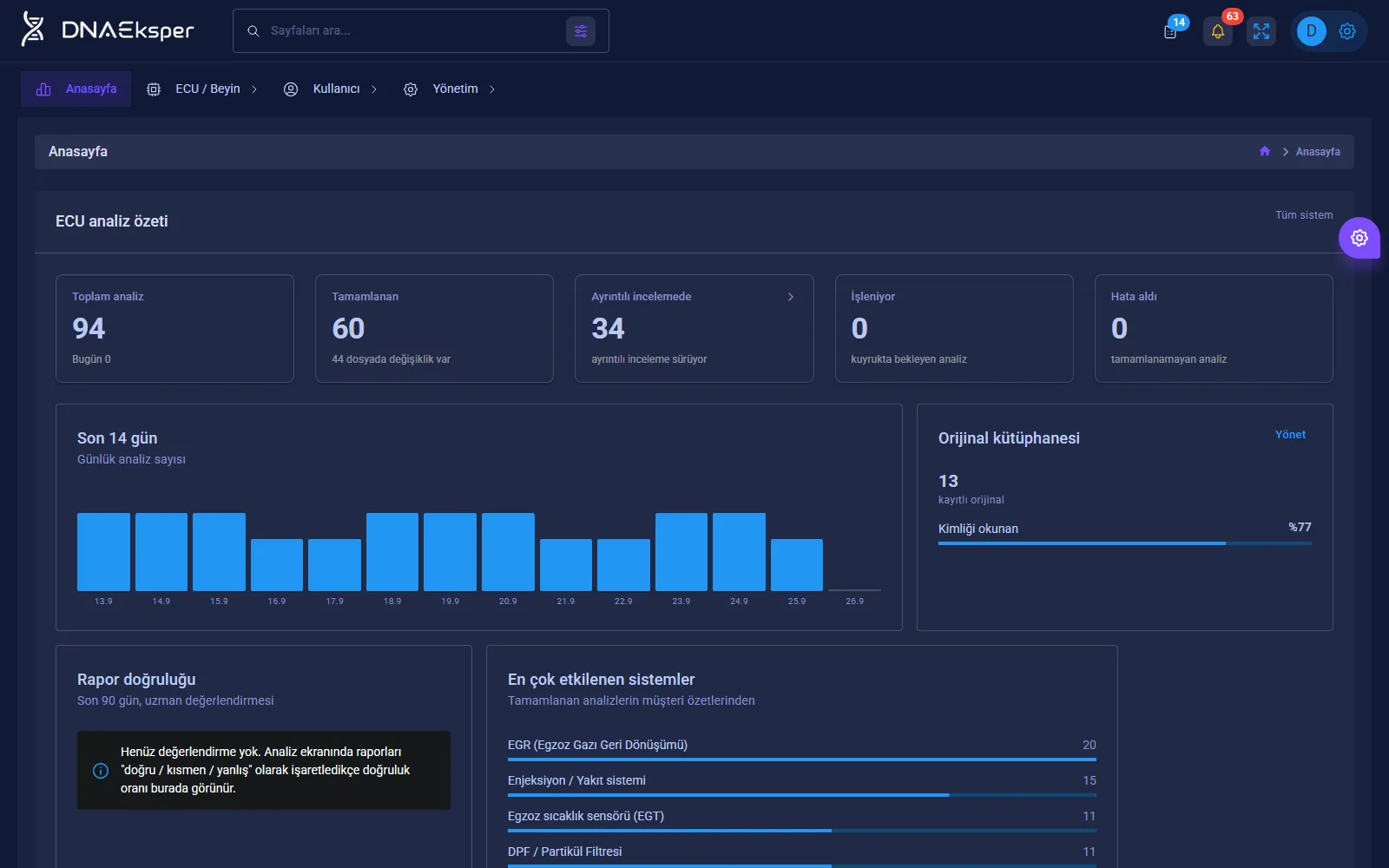
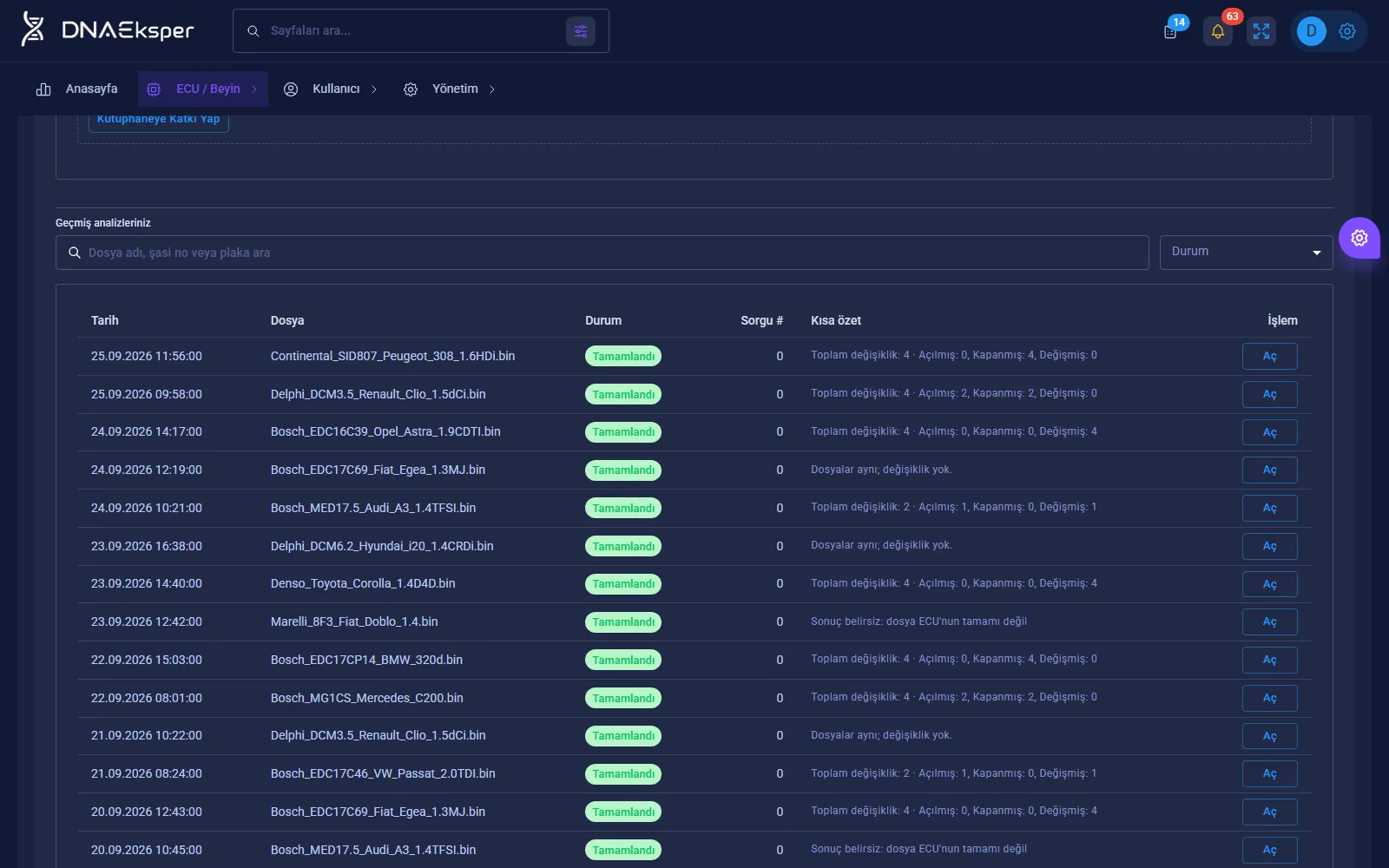
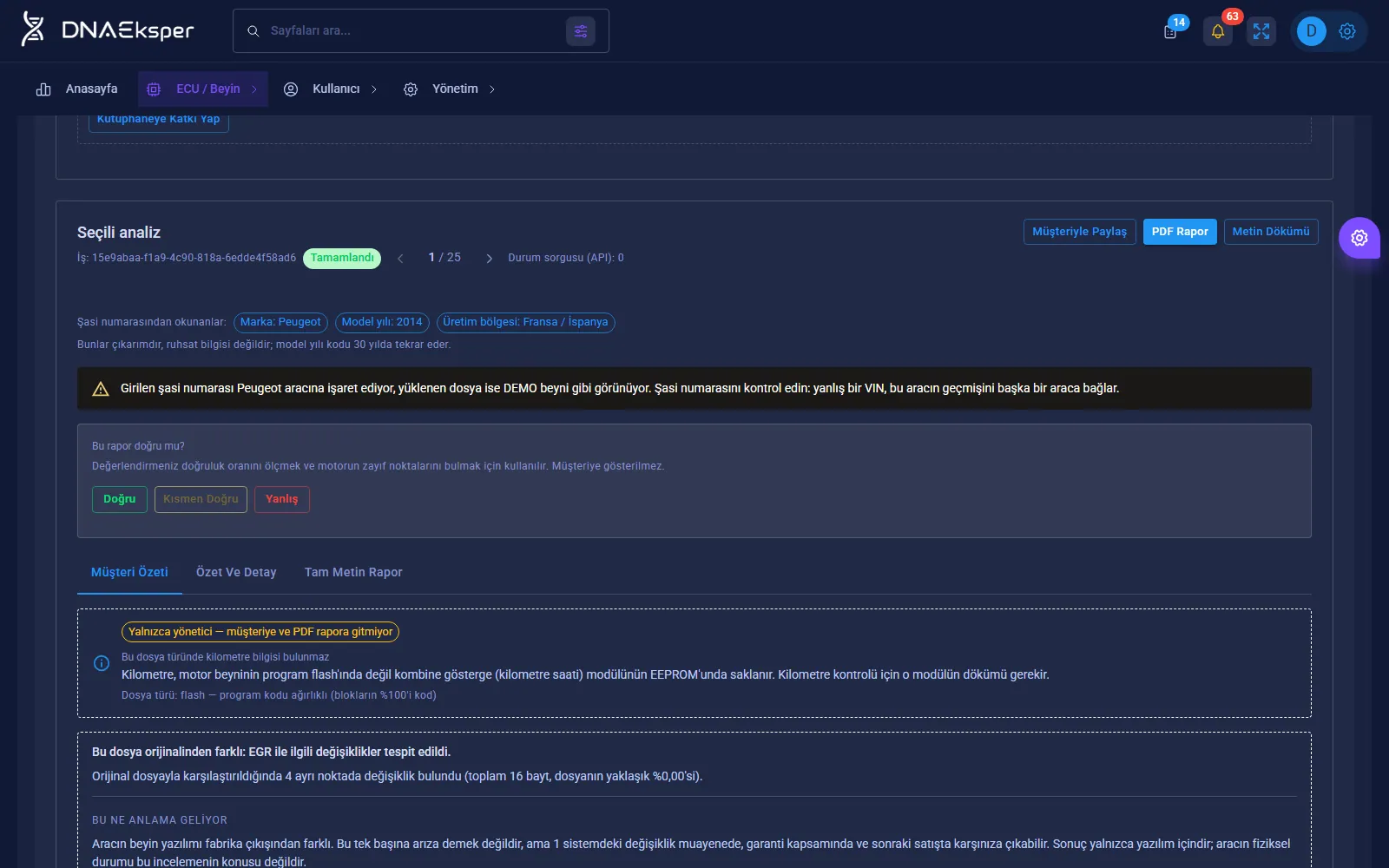
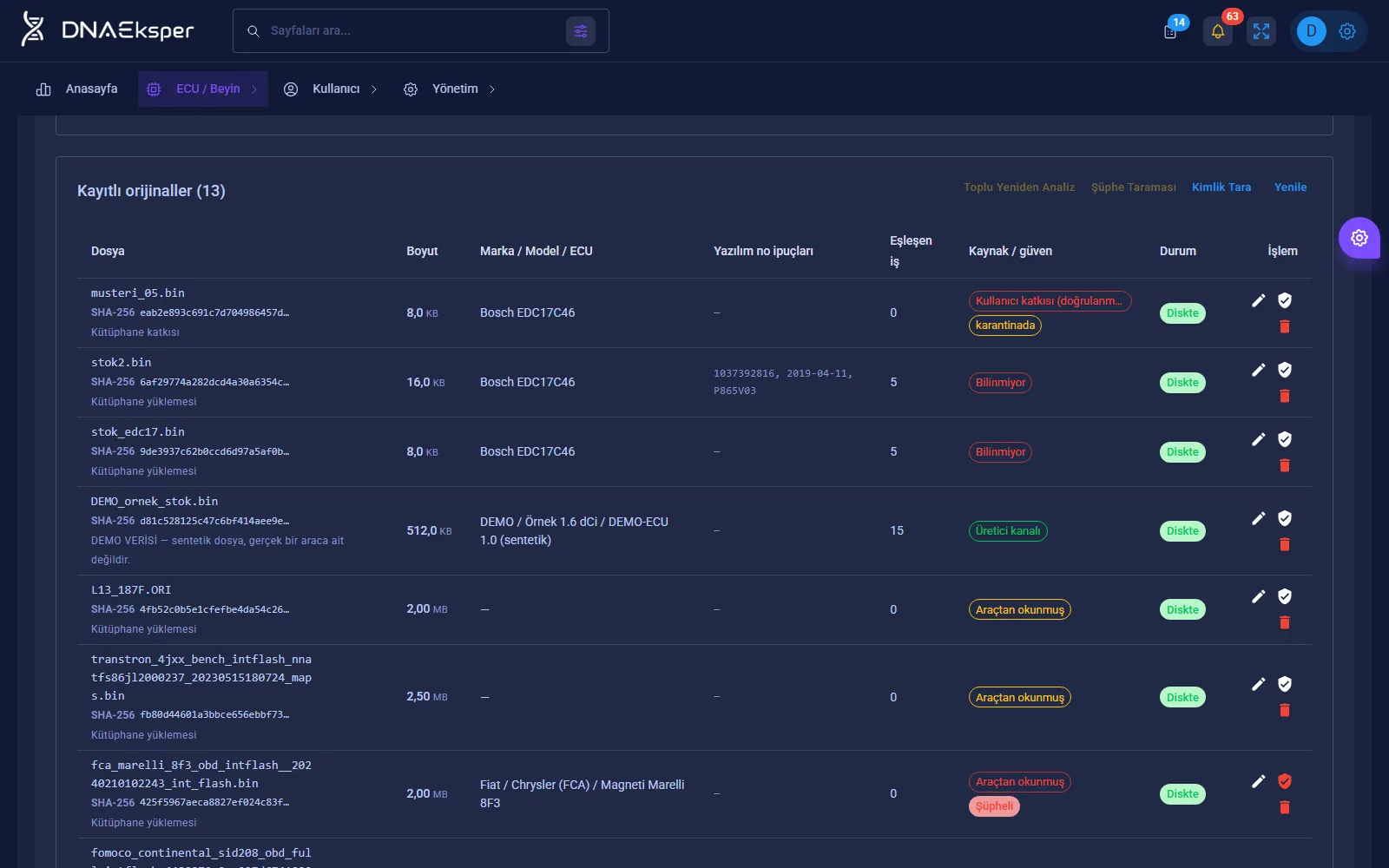
DNAEksper reads the identity of an engine control unit (ECU) file from its contents, matches it with the factory (original) software in the library and compares them byte by byte. It reports changes to EGR, DPF, SCR, speed limiter, fault code suppression and injection/turbo maps in plain language.
The process is automatic and traceable. Every step from file intake to report delivery is recorded; the report can be sent back to the requesting system with an API key and signed webhook.
Capabilities
Limits of the analysis
We state up front what it shows and what it does not; the report should be read within these limits.
- Supported files
- Read files with .bin, .ori, .mod, .hex, .s19, .fls, .frf, .dat, .mpc, .bdm and .dump extensions, from 1 KB to 100 MB. Files are compared as raw bytes.
- Recognized ECU families
- Bosch EDC15/16/17, MED/MEV/MEG17, MD1C; Delphi DCM, DDCR; Magneti Marelli MJD, IAW; Siemens/Continental SID, SIMOS, PCR2.x; Kefico SIM2K. Whether a file can be analyzed depends on the library holding the original of that software.
- When it says “uncertain”
- If the file is not the full ECU, or the original it is compared with is partial or suspect, the result is marked “uncertain” or “insufficient reference”. For a file with no known original, the analysis waits until one is found.
- Not a substitute for a mechanical inspection
- It is a software comparison only. The vehicle's physical condition and hardware changes are out of scope; system names and interpretations are estimates and should be confirmed with a diagnostic tool.
- How long files are kept
- Uploaded files are deleted after 180 days; the report record stays in the account. A file with no matching original may be added to the reference library if it turns out byte-identical across at least three independent uploads.
- AI and model training
- The analysis is a rule-based comparison; no AI model is used and files are not used for model training.
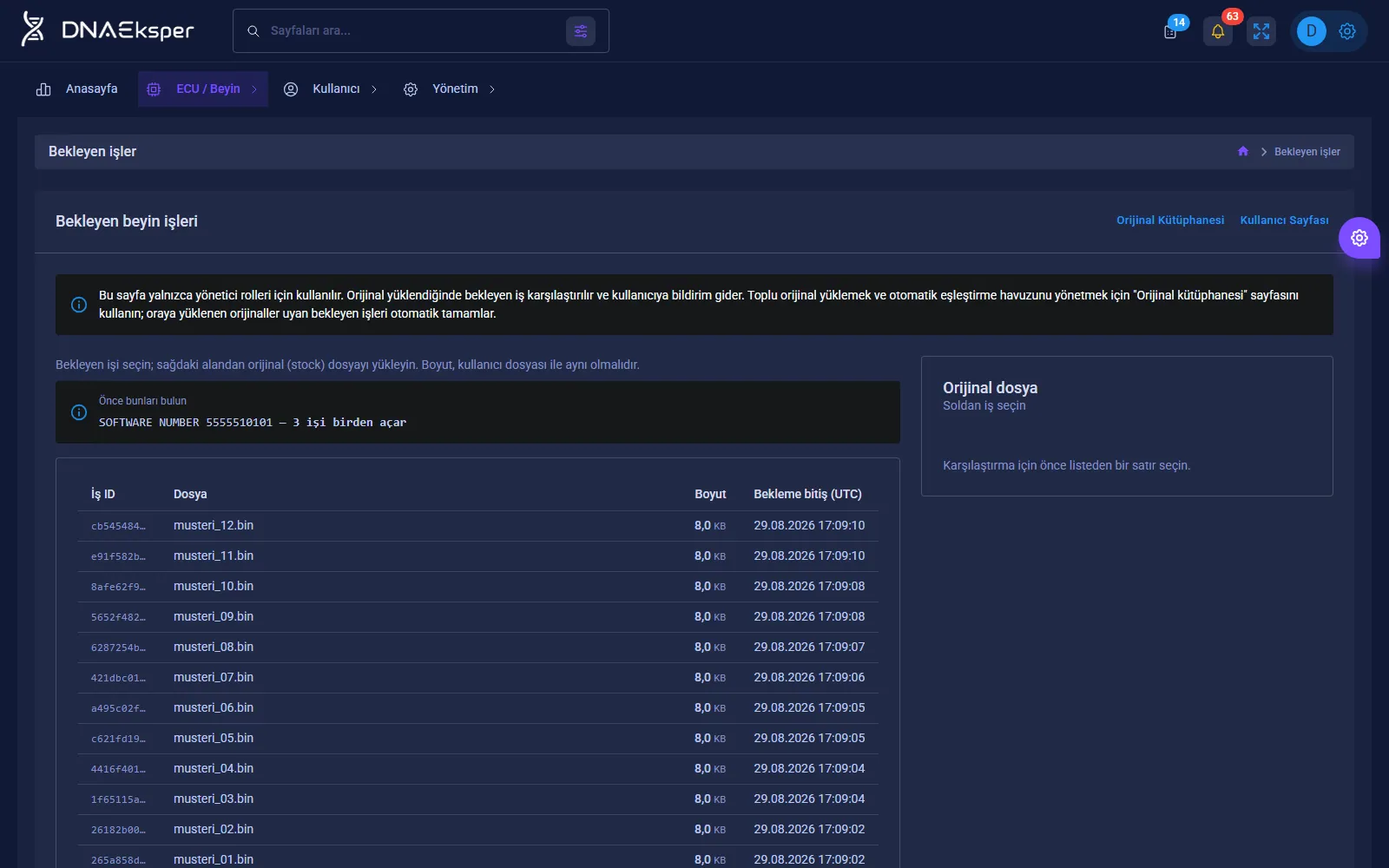
Screenshots
Frequently asked
What does DNAEksper detect?+
It compares the software file taken from the vehicle control unit with its original in the library, marks the changed regions by affected system and reports the findings in plain language.
How is the report delivered?+
A shareable inspection report in a standard format is generated; if required, it's sent automatically to the requesting system via webhook.
When is it used?+
Software appraisal in used-car sales, technical verification in insurance and assessment processes, detecting intervention history at service shops, and software history tracking for fleet vehicles.
Other products
What can DNAEksper do for you?
Let's plan the whole process together, from installation to integration.